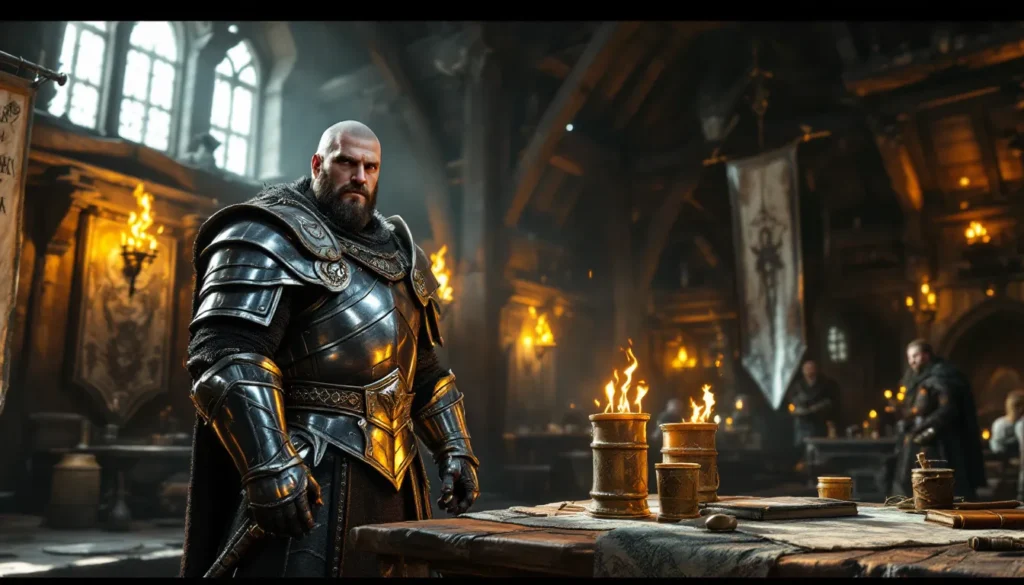
Farkas stands among the most loyal companions in The Elder Scrolls V: Skyrim, a towering Nord warrior who offers more than just brute strength in combat. Whether you’re building a melee-heavy party composition or simply want a reliable follower who won’t flee at the first sign of danger, Farkas delivers consistent performance throughout your journey across Skyrim. He’s also a Master-level Heavy Armor trainer and a potential spouse, making him a versatile choice for players who want utility beyond combat.
This guide covers everything from recruiting Farkas and optimizing his combat effectiveness to troubleshooting common bugs that have persisted across multiple versions of the game. We’ll break down his stats, compare him to his twin brother Vilkas, and explore gear loadouts that transform him from a solid companion into a frontline tank capable of handling Legendary difficulty encounters.
Table of Contents
ToggleKey Takeaways
- Farkas in Skyrim is a highly durable melee tank with a high health pool and Master-level Heavy Armor training that makes him valuable for tank-focused builds throughout the game.
- Recruiting Farkas requires completing the Companions questline through “Glory of the Dead”, after which he becomes a permanent follower with no level cap up to level 50.
- Optimize Farkas’ combat performance by equipping him with Dragonbone or Daedric two-handed weapons and enchanting his gear with magic resistance and health-boosting enchantments to cover his weaknesses.
- Farkas excels as a frontline tank who draws enemy aggro, allowing archer and mage players to deal damage safely from range or at a distance.
- Common Farkas bugs include missing follower glitches and training dialogue issues, which can be fixed using console commands or the Unofficial Skyrim Patch community mod.
- While Farkas isn’t the strongest follower in raw damage numbers, his reliability, low-maintenance personality, and utility as a Heavy Armor trainer make him one of Skyrim’s most dependable companions.
Who Is Farkas? Character Background and Role
Farkas is a Nord member of the Companions, Skyrim’s warrior guild based in Jorrvaskr in Whiterun. He’s the younger twin brother of Vilkas, though he towers over most NPCs with his imposing physical presence. Unlike his brother’s scholarly and serious demeanor, Farkas embraces a simpler, more straightforward approach to life, he likes fighting, he’s loyal to the Circle, and he doesn’t overcomplicate things.
He serves as one of the senior members of the Companions and is part of the inner Circle, a group that shares the lycanthropic gift of werewolf transformations. Farkas plays a prominent role during the Companions questline, particularly during “Proving Honor” where he accompanies the player to Dustman’s Cairn. It’s during this quest that he reveals his werewolf form, making him one of the first characters to demonstrate this transformation in-game.
As a follower, Farkas offers Master-level Heavy Armor training once his affinity is high enough. This makes him exceptionally valuable for melee-focused builds that rely on tanking damage. He’s also marriageable after completing the Companions questline, offering the standard spouse benefits including the Lover’s Comfort buff and shared income from stores.
Farkas’ Personality and Relationship with the Companions
Farkas is refreshingly uncomplicated in a game filled with morally gray characters. He’s genuinely kind, deeply loyal, and admits openly that he’s “not the brains” of the operation, that’s Vilkas’ role. This self-awareness gives him an endearing quality that contrasts with the ego-driven warriors common in Nord culture.
His relationship with the Companions is built on respect and tradition. He follows Kodlak Whitemane’s leadership without question and treats the player with fairness once they prove themselves worthy. Unlike some followers who offer sarcastic commentary or moral objections, Farkas rarely judges your actions. He’s there to fight alongside you, and that simplicity makes him a low-maintenance companion for players who want reliability over narrative complexity.
During the “Purity” quest, Farkas can be cured of his lycanthropy if the player retrieves a Glenmoril Witch head and throws it into the flame. This is purely optional and doesn’t affect his combat performance as a follower, though it does prevent him from transforming into a werewolf during combat (which he does automatically in specific scripted encounters).
How to Recruit Farkas as a Follower
Recruiting Farkas requires completing the majority of the Companions questline. He won’t become available as a follower until you’ve advanced far enough to earn the trust of the Circle and completed certain critical missions.
Completing the Companions Questline
To unlock Farkas as a follower, you need to progress through these key quests:
- “Take Up Arms” – Join the Companions by speaking to Kodlak Whitemane in Jorrvaskr.
- “Proving Honor” – Complete radiant quests for Companions members, then join Farkas in clearing Dustman’s Cairn. This is where he reveals his werewolf form.
- “The Silver Hand” – After becoming a werewolf yourself, you’ll work with the Companions to strike against the Silver Hand.
- “Glory of the Dead” – The final quest in the main Companions storyline. Completing this unlocks Farkas as a permanent follower option.
Once “Glory of the Dead” is complete, you can ask Farkas to follow you by speaking to him in Jorrvaskr. He’ll travel with you indefinitely unless dismissed or replaced by another follower. Unlike some followers, Farkas has no level cap, he continues to scale with the player up to level 50 in the base game, making him viable for endgame content.
Marriage Requirements and Process
Farkas is one of the marriageable NPCs in Skyrim. To marry him, you need to:
- Complete the Companions questline (specifically “Glory of the Dead”).
- Obtain the Amulet of Mara from Maramal in Riften or find one as loot.
- Equip the Amulet of Mara and speak to Farkas. He’ll mention that he’s “interested” if you’re looking for companionship.
- Agree to marry him, then arrange the wedding ceremony with Maramal at the Temple of Mara in Riften.
Once married, Farkas can move into any player-owned home and will provide the Lover’s Comfort resting bonus (+15% skill gain for 8 hours) when you sleep in the same house. He’ll also generate a small daily income and can open a store if you choose a home with that feature enabled. Marriage doesn’t affect his combat stats or follower behavior.
Farkas’ Combat Skills and Stats Breakdown
Farkas is built as a pure melee tank with a heavy focus on two-handed weapons and survivability. His stat distribution reflects his role as a frontline bruiser who absorbs damage while dishing out consistent physical DPS.
Primary Skills:
- Heavy Armor: 100 (Master-level trainer)
- Two-Handed: Scales with player level
- Block: Moderate investment
- Archery: 73 (surprisingly high for a melee specialist, though he defaults to melee in most situations)
Health, Magicka, Stamina:
Farkas has a high health pool that increases as he levels. At level 50, his health sits around 671, making him one of the tankier essential followers. His stamina is also robust, supporting power attacks and sustained melee engagements. Magicka is negligible, he has no spells and won’t benefit from magic-oriented buffs.
Perks:
Farkas benefits from several perks that enhance his survivability and damage output, including perks in the Heavy Armor tree that reduce incoming physical damage and perks in Two-Handed that increase his weapon damage. He does not have access to Shield Wall or other block-heavy perks, so while he can block, he won’t rely on it as much as sword-and-board followers.
Strengths and Weaknesses as a Follower
Strengths:
- High durability: Farkas can take a beating and keep fighting, making him ideal for players who want a companion that won’t go down easily.
- Consistent melee DPS: His two-handed focus means he hits hard with greatswords, warhammers, and battleaxes.
- No level cap (up to 50): Unlike some followers who cap at lower levels, Farkas remains relevant throughout the game.
- Heavy Armor training: Offers Master-level training, saving you the trouble of finding another trainer.
- Low maintenance: He doesn’t complain about your actions, won’t abandon you for moral reasons, and doesn’t require complex management.
Weaknesses:
- Melee-only focus: Farkas has no ranged combat capability beyond his moderate Archery skill, which he rarely uses. This makes him vulnerable to flying enemies or ranged-heavy encounters.
- No magic resistance: Without enchanted gear, Farkas is susceptible to magic damage. Frost mages and shock spells can shred his health if he’s not properly geared.
- AI pathing issues: Like most followers, Farkas can struggle with narrow corridors, traps, and environmental hazards. He’s also prone to triggering pressure plates.
- Can’t sneak effectively: His Heavy Armor and aggressive AI make stealth builds incompatible with his playstyle.
Farkas vs. Vilkas: Which Companion Is Better?
The eternal debate among Companions fans: Farkas or Vilkas? Both brothers are strong followers, but they cater to slightly different playstyles.
Farkas:
- Higher health pool
- Focuses purely on two-handed weapons
- More affable personality
- Master Heavy Armor trainer
Vilkas:
- Slightly higher base damage output
- Can dual-wield or use two-handed weapons depending on gear
- Master Two-Handed trainer
- More serious, no-nonsense dialogue
From a pure combat perspective, the difference is marginal. Vilkas edges ahead in raw damage potential if you optimize his gear, but Farkas offers better survivability and is more forgiving for players who don’t micromanage their followers. If you’re running a tank-heavy build or want a companion who can hold aggro while you handle ranged attacks or magic, Farkas is the better choice. If you want maximum DPS and don’t mind a slightly squishier follower, go with Vilkas.
For players using community resources like modding tools to enhance follower AI or stats, both brothers can be tweaked to perform nearly identically, making the choice more about personal preference than hard numbers.
Best Equipment and Gear for Farkas
Farkas defaults to steel plate armor and a basic two-handed weapon when he joins you, but his true potential unlocks when you equip him with endgame gear. Unlike some followers, Farkas will automatically equip better armor and weapons if you place them in his inventory, provided the armor rating or damage exceeds his current equipment.
Optimal Weapons and Armor Loadouts
Weapons:
- Dragonbone Greatsword or Dragonbone Warhammer: Highest base damage among two-handed weapons. Warhammers offer better stagger potential, while greatswords have faster swing speed.
- Daedric Battleaxe: Slightly lower damage than Dragonbone but easier to acquire and enchant.
- Bloodskal Blade (if using mods or specific playstyles): Offers ranged energy blasts, giving Farkas a pseudo-ranged option.
Armor:
Farkas benefits most from full Heavy Armor sets that maximize his armor rating and provide resistances.
- Dragonplate Armor (full set): Best non-enchanted armor rating. Craft or loot from high-level Draugr or Dragon Priests.
- Daedric Armor (full set): Comparable to Dragonplate with slightly better aesthetic synergy for certain builds.
- Ebony Armor: A strong mid-to-late-game option if Dragonbone or Daedric materials aren’t available yet.
Avoid giving Farkas light armor, he won’t benefit from perks, and you’ll waste his Heavy Armor specialization.
Enchantments and Buffs to Maximize Performance
Enchanting Farkas’ gear is where you transform him from a good follower into an exceptional one. Focus on enchantments that cover his weaknesses and amplify his strengths.
Armor Enchantments:
- Resist Magic (chest or shield): Mitigates his biggest vulnerability. Aim for 40-50% magic resistance total.
- Fortify Health (chest, boots, or ring): Pushes his health pool even higher, making him nearly unkillable on lower difficulties.
- Fortify Heavy Armor (gauntlets, boots): Increases armor rating further, though this is overkill on higher-tier armor sets.
- Resist Fire/Frost/Shock (helmet, chest): Provides specific resistances for dungeons heavy in elemental damage (e.g., draugr crypts with frost mages).
Weapon Enchantments:
- Absorb Health or Absorb Stamina: Keeps Farkas in the fight longer by providing sustain during extended battles.
- Chaos Damage (if you have the Dragonborn DLC): Adds random fire, frost, or shock damage, excellent for maximizing DPS without needing multiple enchanted weapons.
- Fiery Soul Trap: Solid all-around enchantment that adds fire damage and fills soul gems, useful if you’re farming souls alongside combat.
Avoid enchantments like Paralyze or Fear on Farkas’ weapons, they can disrupt combat flow and make it harder to land follow-up attacks. Followers don’t benefit from dual-enchanting perks, so prioritize single, high-impact enchantments.
Training and Leveling with Farkas
One of Farkas’ most underrated benefits is his Master-level Heavy Armor training. This is especially valuable because Master trainers are rare in Skyrim, and Heavy Armor is a critical skill for melee-focused builds.
Utilizing Farkas for Heavy Armor Training
Farkas will train your Heavy Armor skill up to level 90 once you’ve completed the Companions questline and gained his trust. Each training session costs gold based on your current skill level, scaling exponentially as you approach 90.
Optimization Tips:
- Follower gold exploit: You can train with Farkas, then access his inventory as a follower and retrieve your gold. This effectively gives you free training, though some players consider this an exploit. Bethesda never patched it, so it remains viable in all versions including the Anniversary Edition.
- Skill leveling loop: Use Farkas’ training to quickly level Heavy Armor, which contributes to overall character leveling. This is especially useful for power-leveling new characters or filling out skill gaps.
- Combine with gear: Equip Fortify Heavy Armor enchantments or potions before training to maximize your armor rating gains between sessions.
Once you hit level 90 in Heavy Armor, Farkas can no longer train you, but by that point you’re close enough to cap the skill naturally through combat or grinding.
Beyond training, Farkas doesn’t offer unique leveling benefits compared to other followers. He doesn’t teach spells, provide crafting bonuses, or unlock special perks. His value lies in his combat reliability and utility as a trainer for a high-demand skill.
Optimal Combat Strategies and Playstyles with Farkas
Farkas thrives in direct, aggressive combat scenarios where his high health and two-handed damage can dominate. He’s not a tactical genius, he’ll charge headfirst into danger, but that predictability makes him easy to build around.
Melee Tank Builds
Farkas excels as a frontline tank who draws aggro while you handle ranged attacks, magic, or flanking maneuvers. This strategy works best for the following player builds:
Archer/Sniper Players:
Let Farkas engage enemies in melee while you pick off targets from range. His high health and armor rating keep him alive even when surrounded, and his aggressive AI ensures enemies focus on him instead of tracking you down.
Mage Players:
Farkas provides the physical presence mages lack. Cast buffs like Oakflesh or Stoneflesh on him (or use Courage/Rally spells) to enhance his survivability, then unleash destruction magic from safety. Be cautious with AoE spells like Fireball, Farkas will walk into them.
Dual-Wield or Sword-and-Board Players:
If you’re also playing melee, Farkas functions as a secondary DPS who splits enemy attention. Coordinate power attacks or use Unrelenting Force to stagger groups while Farkas cleans up stragglers. Avoid overlapping too much in the same space, cramped dungeons can cause both of you to block each other’s swings.
Werewolf Transformation Tactics
Farkas retains his werewolf abilities unless cured during the “Purity” quest. In certain scripted encounters, particularly during Companions quests, he’ll transform automatically. As a follower in general gameplay, he won’t transform unless modded to do so.
If you’re also running a werewolf build, pairing with Farkas thematically makes sense, though mechanically he won’t shift forms outside of specific quest triggers. For players seeking advanced character builds that optimize lycanthropy mechanics, consider mods that allow followers to transform on command or tie transformations to health thresholds.
Werewolf Build Synergies:
- Use Howl of Terror to scatter enemies while Farkas engages stragglers.
- Transform simultaneously during tough boss fights (if modded) to maximize melee DPS.
- Equip Farkas with the Ring of Hircine (if you can spare it) to enable multiple transformations per day.
Without mods, Farkas’ werewolf form is mostly a lore/flavor element rather than a combat tool you can rely on.
Common Issues and Troubleshooting Farkas Bugs
Like many Skyrim followers, Farkas is prone to several bugs that can disrupt gameplay. Most of these issues have community-documented fixes, though some require console commands or mods to resolve.
Missing Follower Glitches and Fixes
Issue: Farkas Won’t Follow
Sometimes Farkas refuses to follow you even after completing the required quests. This is usually caused by:
- Another follower already active: Dismiss your current follower first.
- Quest flag issues: If you dismissed Farkas during a Companions quest and never rehired him, his AI may be stuck in a quest-specific state.
Fix:
- Open the console (PC only) by pressing
~and click on Farkas to target him. - Type
setrelationshiprank player 3to reset his relationship status. - Type
addfac 0005C84D 1to add him back to the follower faction if he was removed. - If that fails, try
recycleactorto reset his AI entirely (this may reset his inventory, so retrieve gear first).
Issue: Farkas Disappears After Dismissal
If you dismiss Farkas and he doesn’t return to Jorrvaskr, he’s likely stuck in the location where you dismissed him or along the travel path.
Fix:
- Fast travel back to the location where you dismissed him and wait 24-48 in-game hours.
- Check Jorrvaskr, he may have teleported there after a cell reset.
- Use the console command
prid 0001A696followed bymoveto playerto teleport Farkas directly to your location.
Issue: Farkas Won’t Train Heavy Armor
This usually occurs if the training dialogue option is grayed out or missing entirely.
Fix:
- Ensure you’ve completed “Glory of the Dead”, training unlocks after this quest.
- Check that your Heavy Armor skill is below 90 (he can’t train beyond this).
- If still broken, use the console:
player.setav heavyarmor [desired level]to manually adjust your skill, then attempt training again.
Issue: Farkas Attacks the Player
Rare but frustrating, this happens if you accidentally hit him too many times or commit a crime in his presence.
Fix:
- Yield by sheathing your weapon and waiting for him to calm down.
- Pay any bounties in Whiterun Hold.
- If he remains hostile, use the console command
setav aggression 0while targeting him.
Many of these bugs persist across all versions of Skyrim, including Special Edition and Anniversary Edition. For players who frequently encounter follower issues, the Unofficial Skyrim Patch (available via community mod platforms) addresses dozens of follower-related bugs, including several that affect Farkas specifically.
Conclusion
Farkas isn’t flashy, but he’s one of the most dependable followers in Skyrim. His combination of high survivability, solid melee DPS, and Master-level Heavy Armor training makes him a strong pick for players who value reliability over complexity. Whether you’re running a tank build, need a follower who can hold aggro during intense fights, or simply want a companion who won’t judge your every decision, Farkas delivers.
Optimize his gear with high-tier armor and enchantments, take advantage of his training services, and work around his AI quirks, and you’ll have a follower who remains effective well into endgame content. He’s not the strongest follower in raw numbers, but his versatility and low-maintenance nature make him a staple for many playthroughs.